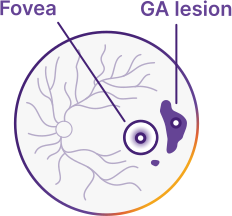
How GA progresses

GA is an advanced form of dry AMD

AMD = age-related macular degeneration

Man leaning on an orange pickup truckMan leaning on an orange pickup truck

Understanding GA

GA is a serious condition that leads to irreversible vision loss

GA causes cells in your retina to die, also known as atrophy. This creates patches of dead cells called lesions that cause vision loss.

Side view of the eye
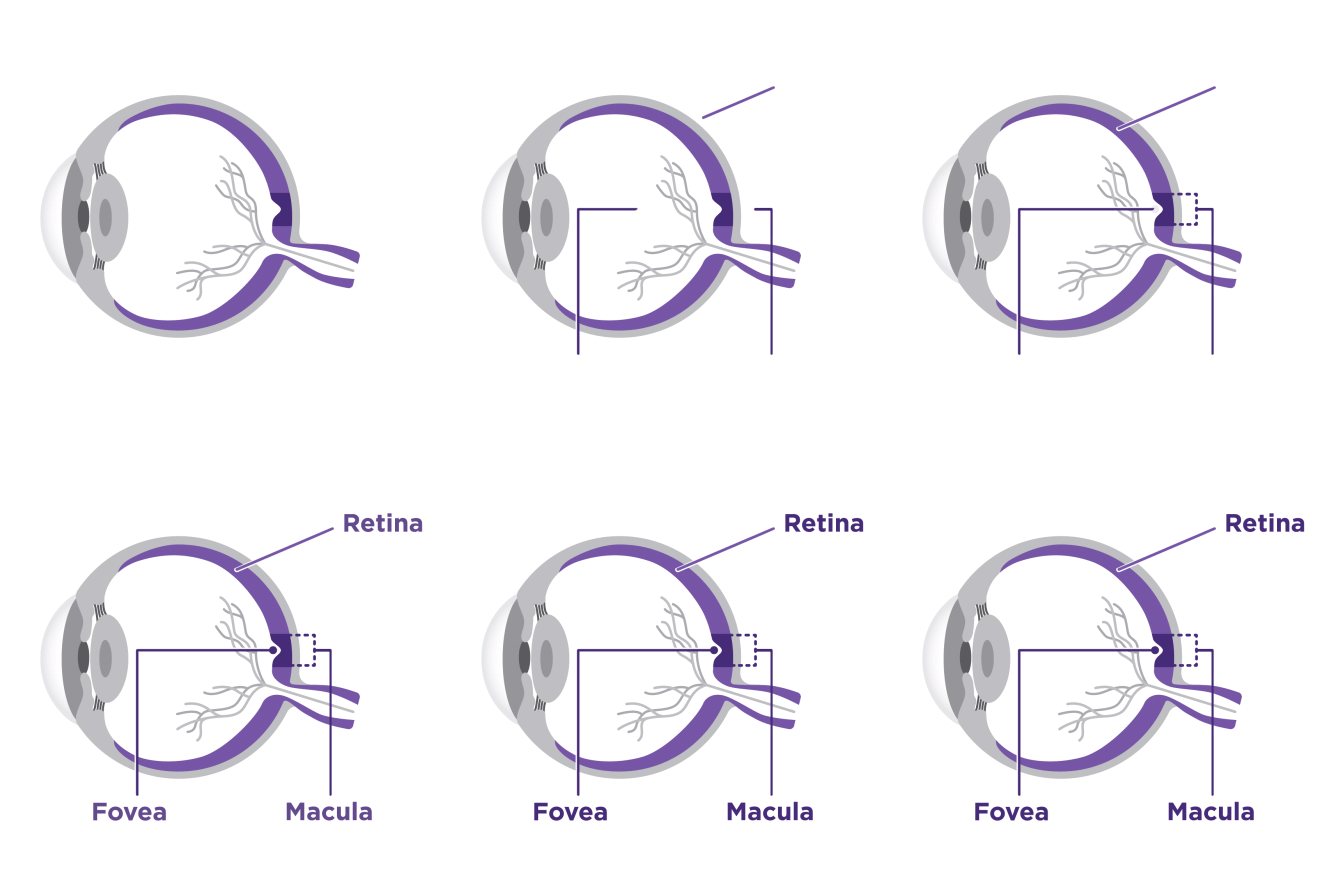
Side view of the eye

Retina

Senses light and converts it into signals that your brain turns into images.

Macula

The center of your retina that helps you see detail.

Fovea

Responsible for your sharpest and clearest vision.
GA PROGRESSION

GA can progress unpredictably and faster than you think

In as few as 2.5 years, GA can spread to the fovea, where vision is sharpest and clearest.*

Back view of the eye

Back view of eye_early onset

Early onset

Lesions grow and retinal cells are damaged.
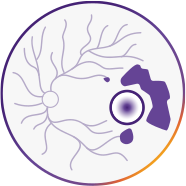
Back view of eye_GA progression

GA progression

Lesions grow larger and get closer to the fovea.
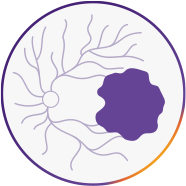
Back view of eye_severe vision loss

Severe vision loss

When lesions reach the fovea, it can lead to severe vision loss.

Partner with a retina specialist to monitor for changes in lesions and impact to your vision

*Median time since diagnosis in an analysis of 181 patients with GA.

GA progression is different for everyone. Some people may experience slower or faster GA progression and changes in vision.

Retina specialists are medical doctors highly trained in treating conditions that affect the retina.

Image of Ken, real GA patient


I want to maintain my eyesight for as long as possible, and I felt a real sense of urgency to find a treatment that can slow GA and may help that.Ken, real GA patient

SIGNS AND SYMPTOMS

Everyone experiences GA symptoms differently

If changes in your vision are impacting your everyday life, it may be a sign that your GA is progressing. Are you experiencing any of these symptoms?

straight lines appearing wavy icon

Straight lines appearing wavy

harder to see at night icon

Harder to see at night

Blank spots obscuring central vision icon

Blank spots in your field of vision

Words looking blurry and colors looking washed out icon

Words looking blurry and colors looking washed out

Even if your symptoms seem mild now, irreversible damage from GA could still be progressing

The goal of treatment is to slow GA, which could help preserve your vision longer

IMPORTANT SAFETY INFORMATION AND USE

Do NOT receive IZERVAY® if you:

  • Have an infection in or around your eye
  • Have active swelling in or around your eye that may include pain and redness

IZERVAY can cause serious side effects:

  • Eye injections like the one for IZERVAY can cause an eye infection (endophthalmitis) or separation of layers of the retina (retinal detachment).
  • Call your healthcare provider right away if you have redness of the eye, eye pain, increased discomfort, worsening eye redness, blurred or decreased vision, an increased number of small specks floating in your vision, flashes of light, or increased sensitivity to light.
  • There is a risk of developing wet AMD with IZERVAY. You should report any symptoms (visual distortions such as straight lines seeming bent, deterioration in vision, dark spots, loss of central vision) to your healthcare provider to monitor.
  • IZERVAY may cause a temporary increase in eye pressure after the injection. Your healthcare provider will monitor this after each injection.

Before receiving IZERVAY tell your healthcare provider about all of your medical conditions including if you:

  • Have a history of seeing flashes of light or small specks floating in your vision and if you have a sudden increase of size and number of these specks.
  • Have high pressure in the eye or if you have glaucoma.
  • Are pregnant or breastfeeding, think you may be pregnant, or are planning to have a baby, ask your doctor for advice before taking this medicine.
  • Are taking any medications, including prescription and over-the-counter medicines, vitamins, and herbal supplements. Tell your healthcare provider about any medicine you take.

What should I avoid while receiving IZERVAY?

  • Your vision may be impaired after receiving an eye injection or after an eye exam. Do not drive or use machinery until your vision has recovered sufficiently.

What are the most common side effects of IZERVAY?

  • Blood in the white of the eye
  • Increase in eye pressure
  • Blurred vision
  • Wet age-related macular degeneration

These are not all the possible side effects of IZERVAY. Tell your healthcare provider about any side effect that bothers you or that does not go away.

Call your healthcare provider for medical advice about side effects. You are encouraged to report negative side effects of prescription drugs to the FDA. Visit www.fda.gov/medwatch, or call 1-800-FDA-1088.

Please see full Prescribing Information for more information.

What is IZERVAY?

IZERVAY (avacincaptad pegol intravitreal solution) is a prescription eye injection, used to treat geographic atrophy (GA), the advanced form of dry age-related macular degeneration (AMD).

IMPORTANT SAFETY INFORMATION AND USE

Do NOT receive IZERVAY® if you:

  • Have an infection in or around your eye
  • Have active swelling in or around your eye that may include pain and redness

IZERVAY can cause serious side effects:

  • Eye injections like the one for IZERVAY can cause an eye infection (endophthalmitis) or separation of layers of the retina (retinal detachment).
  • Call your healthcare provider right away if you have redness of the eye, eye pain, increased discomfort, worsening eye redness, blurred or decreased vision, an increased number of small specks floating in your vision, flashes of light, or increased sensitivity to light.
  • There is a risk of developing wet AMD with IZERVAY. You should report any symptoms (visual distortions such as straight lines seeming bent, deterioration in vision, dark spots, loss of central vision) to your healthcare provider to monitor.
  • IZERVAY may cause a temporary increase in eye pressure after the injection. Your healthcare provider will monitor this after each injection.

Before receiving IZERVAY tell your healthcare provider about all of your medical conditions including if you:

  • Have a history of seeing flashes of light or small specks floating in your vision and if you have a sudden increase of size and number of these specks.
  • Have high pressure in the eye or if you have glaucoma.
  • Are pregnant or breastfeeding, think you may be pregnant, or are planning to have a baby, ask your doctor for advice before taking this medicine.
  • Are taking any medications, including prescription and over-the-counter medicines, vitamins, and herbal supplements. Tell your healthcare provider about any medicine you take.

What should I avoid while receiving IZERVAY?

  • Your vision may be impaired after receiving an eye injection or after an eye exam. Do not drive or use machinery until your vision has recovered sufficiently.

What are the most common side effects of IZERVAY?

  • Blood in the white of the eye
  • Increase in eye pressure
  • Blurred vision
  • Wet age-related macular degeneration

These are not all the possible side effects of IZERVAY. Tell your healthcare provider about any side effect that bothers you or that does not go away.

Call your healthcare provider for medical advice about side effects. You are encouraged to report negative side effects of prescription drugs to the FDA. Visit www.fda.gov/medwatch, or call 1-800-FDA-1088.

Please see full Prescribing Information for more information.

What is IZERVAY?

IZERVAY (avacincaptad pegol intravitreal solution) is a prescription eye injection, used to treat geographic atrophy (GA), the advanced form of dry age-related macular degeneration (AMD).